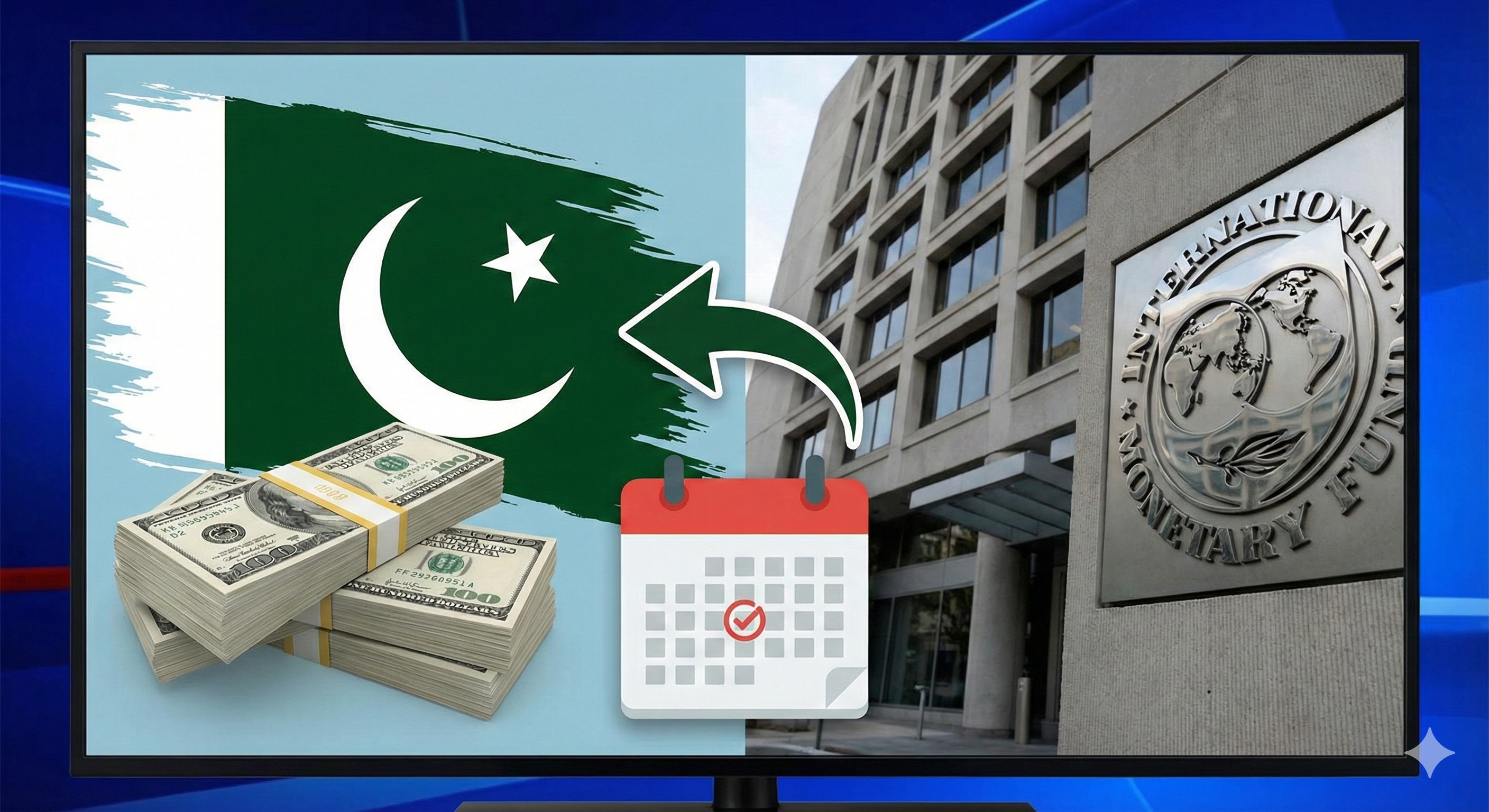
WASHINGTON: The International Monetary Fund (IMF) Executive Board will meet tomorrow (Dec 8) to review Pakistan’s loan programme — a crucial step that is likely to unlock around $1.2 billion in fresh financing at a sensitive moment for the country’s economy.
The IMF confirmed the meeting through its official announcement on Friday. According to the Fund’s board calendar, the session will evaluate Pakistan’s progress under the Extended Fund Facility (EFF) and the Resilience and Sustainability Facility (RSF). If approved, Pakistan is expected to receive $1 billion under the EFF and $200 million under the RSF.
The upcoming review carries significant weight for Pakistan as it looks to stabilise its economy amid rising external pressures and post-flood challenges. A positive decision from the IMF Board would not only unlock much-needed financing but also restore investor confidence, strengthen the country’s foreign exchange reserves, and support ongoing reforms in fiscal management, energy, and governance. The disbursement is expected to reinforce Pakistan’s economic recovery efforts and signal continued international support for its reform agenda.
Background: Staff-Level Deal Already Completed
The board meeting comes after a staff-level agreement reached in October, following detailed discussions held in Karachi, Islamabad, and Washington between Sept 24 and Oct 8.
Although the IMF staff had already signalled satisfaction with Pakistan’s progress, the final disbursement still requires formal board approval.
Discussions, led by IMF mission chief Iva Petrova, focused on:
- Pakistan’s fiscal performance and budget discipline
- Monetary policy and inflation management
- Structural reforms
- Progress on climate-related commitments under the RSF
IMF’s Latest Assessment of Pakistan
In its earlier review, the IMF noted that Pakistan had shown:
- Strong progress in fiscal consolidation
- Improved inflation control
- Strengthened foreign exchange buffers
- Effective monetary tightening by the State Bank of Pakistan (SBP)
The Fund also appreciated efforts toward structural reforms, especially in:
- State-owned enterprises
- Energy-sector sustainability
- Competition reforms
- Public service improvements
Under the RSF, Pakistan had also advanced climate initiatives, including better water-resource management, disaster resilience, and upgrades to climate-related information systems — a priority after the devastating floods that hit the country.
Why This Approval Matters
Approval of the loan reviews is expected to boost investor confidence at a time when Pakistan is working to stabilise its economy amid external pressures and the long-term impact of flood damages.
However, Islamabad continues to face pressure to:
- Maintain strict fiscal discipline
- Speed up energy-sector reforms
- Enhance revenue mobilisation
- Implement long-term reforms for stability
While the IMF has acknowledged positive progress, it warns that economic risks remain elevated due to flood-driven losses and external vulnerabilities. The Fund has stressed that monetary policy must remain tight and data-driven to keep inflation within the SBP’s target.
If the board grants approval tomorrow, Pakistan may receive the funds as early as the next day, helping strengthen external reserves, support economic recovery, and signal international confidence in Pakistan’s reform direction.
⭐ GCDA Report Released: 15-Point Reform Plan Urged
The IMF also released its long-awaited Governance and Corruption Diagnostic Assessment (GCDA). The report highlighted deep-rooted corruption challenges due to systemic institutional weaknesses and proposed a 15-point reform agenda to improve transparency, governance, and fairness.
According to the IMF, if Pakistan implements these reforms within the next 3 to 6 months, the country could achieve an additional 5% to 6.5% economic growth over five years.
The report sparked political criticism, with opposition parties calling it the “worst financial scandal” in Pakistan’s history.
Finance Minister Muhammad Aurangzeb, however, clarified that the report should be viewed as a catalyst for long-overdue reforms rather than criticism. He emphasised that significant improvements had already been made in key sectors, while remaining recommendations were part of an ongoing reform agenda aimed at supporting long-term economic stability.